Case Study
Treyspace
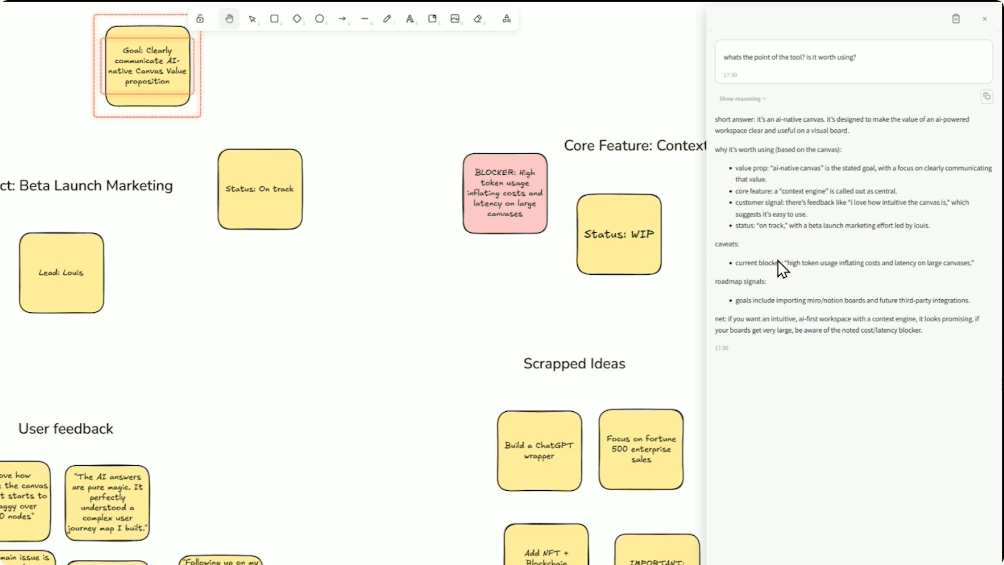
Live demoExcalidraw with an AI chat that can read your board. Shapes, arrows and positions are stored as a graph in HelixDB, and the model queries that graph through MCP tools, citing the nodes it used. Tested on 125 questions, including ones the board can’t answer, to measure citation accuracy and hallucination rate. Live at treyspace.app; the SDK is on GitHub.
Outcomes
Impact
- Shipped to production on Azure and GCP, running real-time collaborative sessions for early users.
- Built solo end-to-end over ten weeks: ingestion pipeline, GraphRAG, auth, and billing.
Stack
Tools
Decisions
Key decisions
- Treating the canvas as the source of truth produced a much better UX than flattening content into plain notes.
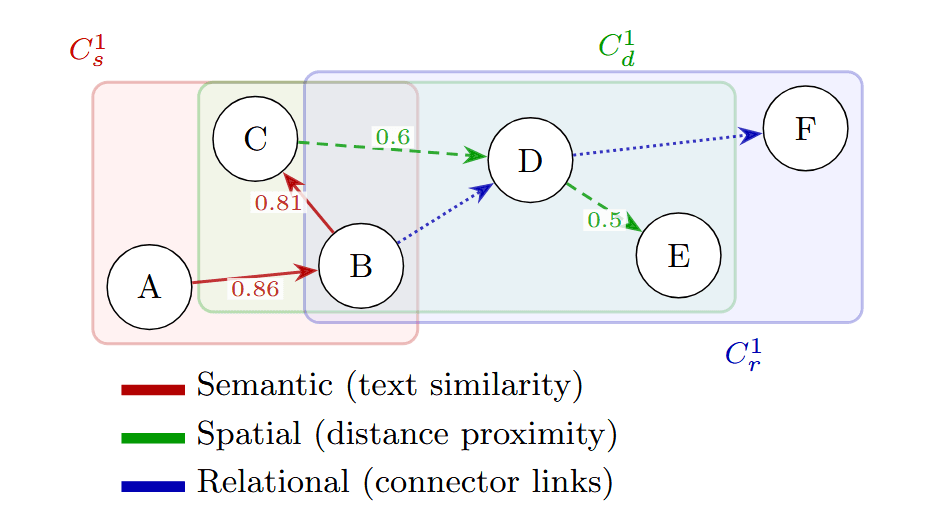
- Clustering based on proximity plus explicit links consistently beat semantic-only grouping.
- Auth and billing had to be integrated into the core product flow to support onboarding and team usage.
Approach
Technical approach
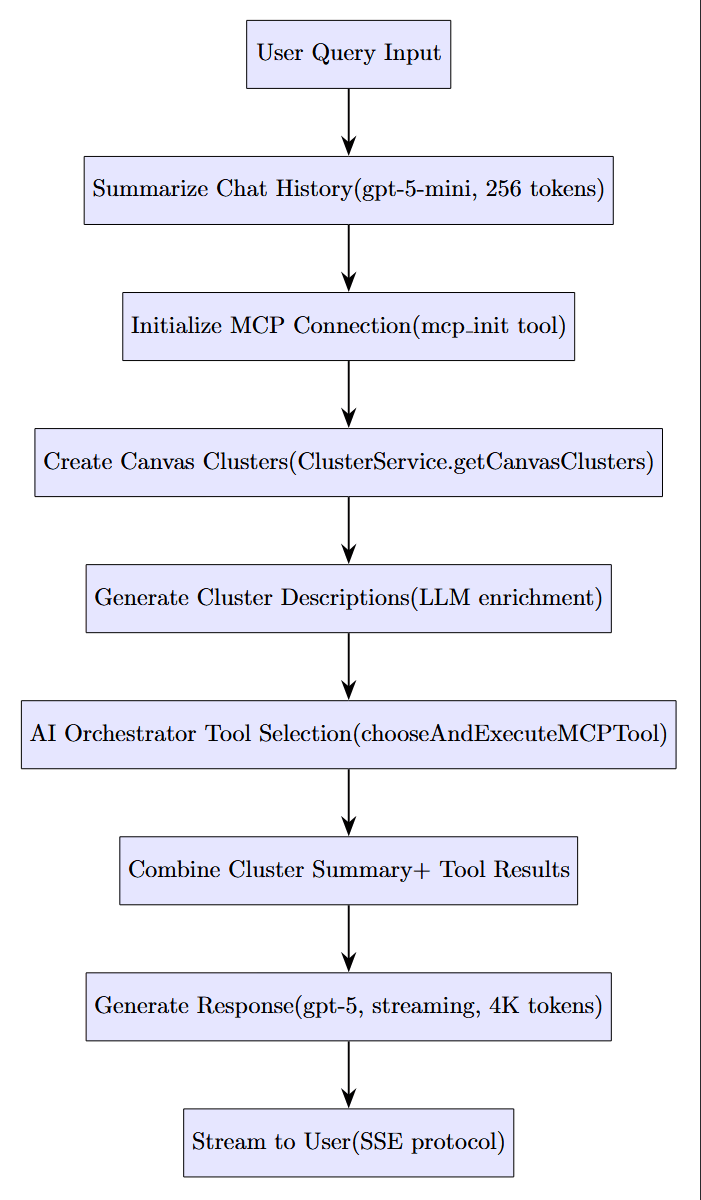
- Excalidraw events stream into a canvas-to-graph pipeline that builds semantic, relational, and spatial clusters.
- Entities are synced into graph/vector storage so retrieval can use structure and not just raw text.
- AI endpoints stream responses with board-aware context and links back to source nodes.
- Collaboration and access control are handled through Supabase authentication.
- Paid plans and recurring billing are managed through Stripe flows.
Visuals
Comparison
Links