Avarice, not Invidia
The downfall of Jensen Huang
· 1 min read
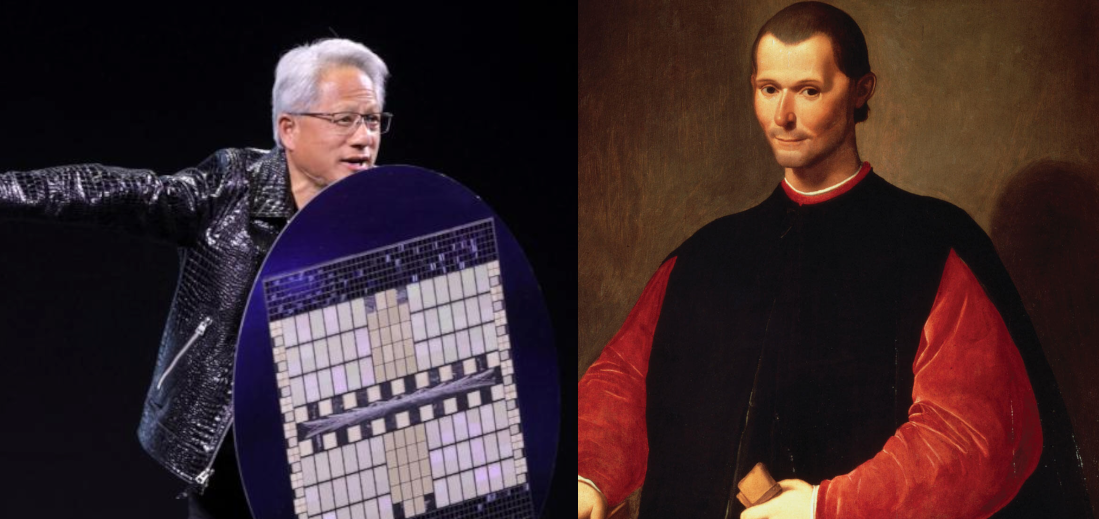
The modern-day exile is the corporate ouster. Will Huang be able to repeat Napoleon and Altman who had overwhelming support for their return, or will the threat of the whims of an erratic US government make his departure permanent?
The ouster of Jensen Huang is a solemn reminder of the Machiavellian reality — beyond the veneer of cordial relationships is a world of self-interest and scheming. Both perpetrated by and directed at Huang.
This highlights the vital importance of retaining control of one’s business. Accepting too much dilution and loss of voting rights causes this situation where a hostile ouster is possible.
His ouster was wrought by the whims of investment conglomerates whose actions face no scrutiny and have no visible chain of consequence. Huang, 63, having sacrificed 33 years of his life building a $4tn company, has zero power, zero leverage other than the accumulated goodwill of his contemporaries. It is uncertain whether he will return to Nvidia, found a new company, or be swamped with legal battles.
His position lies purely in soft power ─ being the recognisable face of Nvidia, with the façade of power supported only by his own internal and external popularity and the favour of the US government ─ rather than hard power conferred by voting control. Once others’ opinion of him inevitably changes, all he has gained is lost. In The Prince, Savonarola is such a person; a preacher executed once it was revealed that he fabricated his prophecies. Without military force, his ideals were seen as nothing more than a nuisance, dealt with by the Pope. Eight years later, the Swiss Guard was founded.
Soft power holds only as long as opinion does. Altman’s held; Savonarola’s didn’t. Huang is now finding out which he is.